
The revision of the Merger Guidelines is entering its final phase. The Guidelines do not have the character of a law, but play an important role in the implementation of the EU control of mergers. They are considered so-called “soft law”. From the very beginning, we as Rebalance Now have accompanied the revision process. In order to influence the final revisions, we organised an event with renowned academics in the European Parliament called “Merger Control in the Real World.” The conversations included sharp criticisms of the current practices of merger control, raising important concerns regarding out of touch practices and the need for substantive evidence to inform best practices.. Moderators James Kanter and Justine Haekens did a great job guiding our panelists through a presentation the serious weaknesses of the new guidelines. As in the past, the Commission engaged in a constructive exchange.
Together with the New Competition School, a network of critical academics from competition law and economics, as well as our civil society partners from the Open Markets Institute Europe, we organized this event at the European Parliament on 29 September. The cross party event was hosted by MEP Rasmus Andresen (Greens).
The event consisted of a panel discussion on why merger control has not prevented increasing market concentration in Europe over the past two decades. This was followed by a roundtable with academics who discussed specific aspects of the Merger Guidelines.
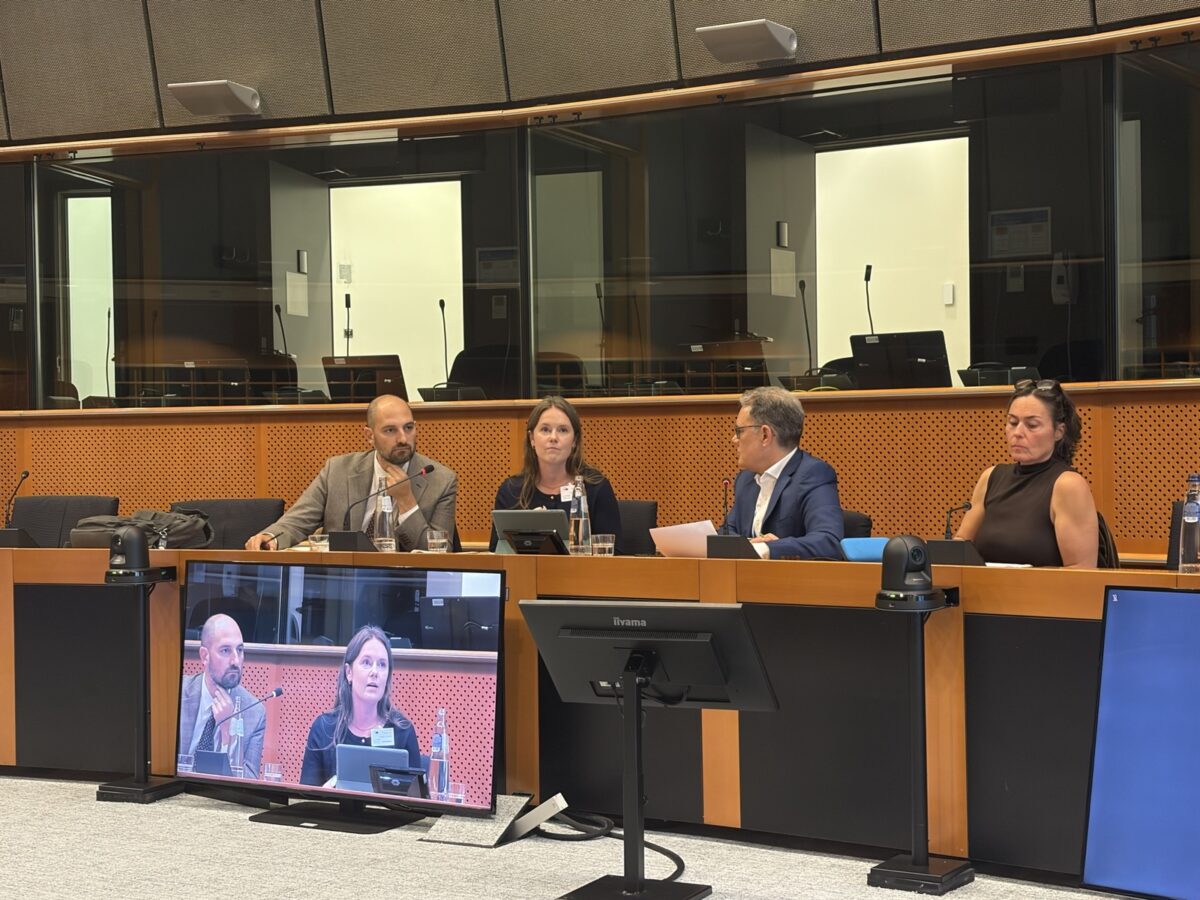
The lasting influence of the Chicago School?
The panel included Kati Cseres (Amsterdam Centre for European Law and Governance), Daniele Calisti (Head of Unit Head for Merger policy and case support, DG Competition) for the EU Commission and Annika Stöhr (Technical University Ilmenau). It was moderated by journalist James Kanter, who runs the prominent podcast EU Scream.
The core topic of the panel was whether the Chicago School of Economics neoliberal movement of the 1980s have had an important impact on EU competition policy and have thus caused insufficient intervention by the EU competition authority, in particular in merger control. The analytical methods associated with these scientific currents also played an important role in the debate. It’s all about the so-called efficiencies (and their repackaged younger cousin “dynamic efficiencies”) that are the cornerstone of the Chicago School economics.
- Kati Cseres argued that the increased role of economics and the decreasing role of law in merger control since the early 2000s was due to the influence of the Chicago School. The role of economics in EU merger control is also reflected in the establishment of the Chief Economist Team at DG Competition, which has a key role in all notified mergers. Cseres also said the new guidelines were tantamount to weakening democracy by failing to tame corporate power.
- Annika Stoehr showed how there’s little evidence of “efficiencies” in the real world, and they are even more elusive in digital markets, although this claim is considered an important justification in favour of mergers. Efficiencies are of great importance in the Commission’s current draft guidelines. However, in Stöhr’s view, this has less to do with the influence of the Chicago School.
- Daniele Calisti as the representative of the Commission on the panel doubted the importance of the Chicago School for the lax application of merger control instruments and emphasized that the current system of merger control fulfills its task. This also applies to the current draft of the guidelines.
- Whether conflicts of interest and changes of sides between business consulting firms and the EU Commission play a role remained open. The Commission responded to critique with emotion, and held to the view that they see no problem here and spoke of a “system that fundamentally sound.” Cseres, on the other hand, problematized the role of consulting firms and law firms.
- More on why economic consultancies play a problematic role in EU competition policy, and in particular in merger control, can be found here.
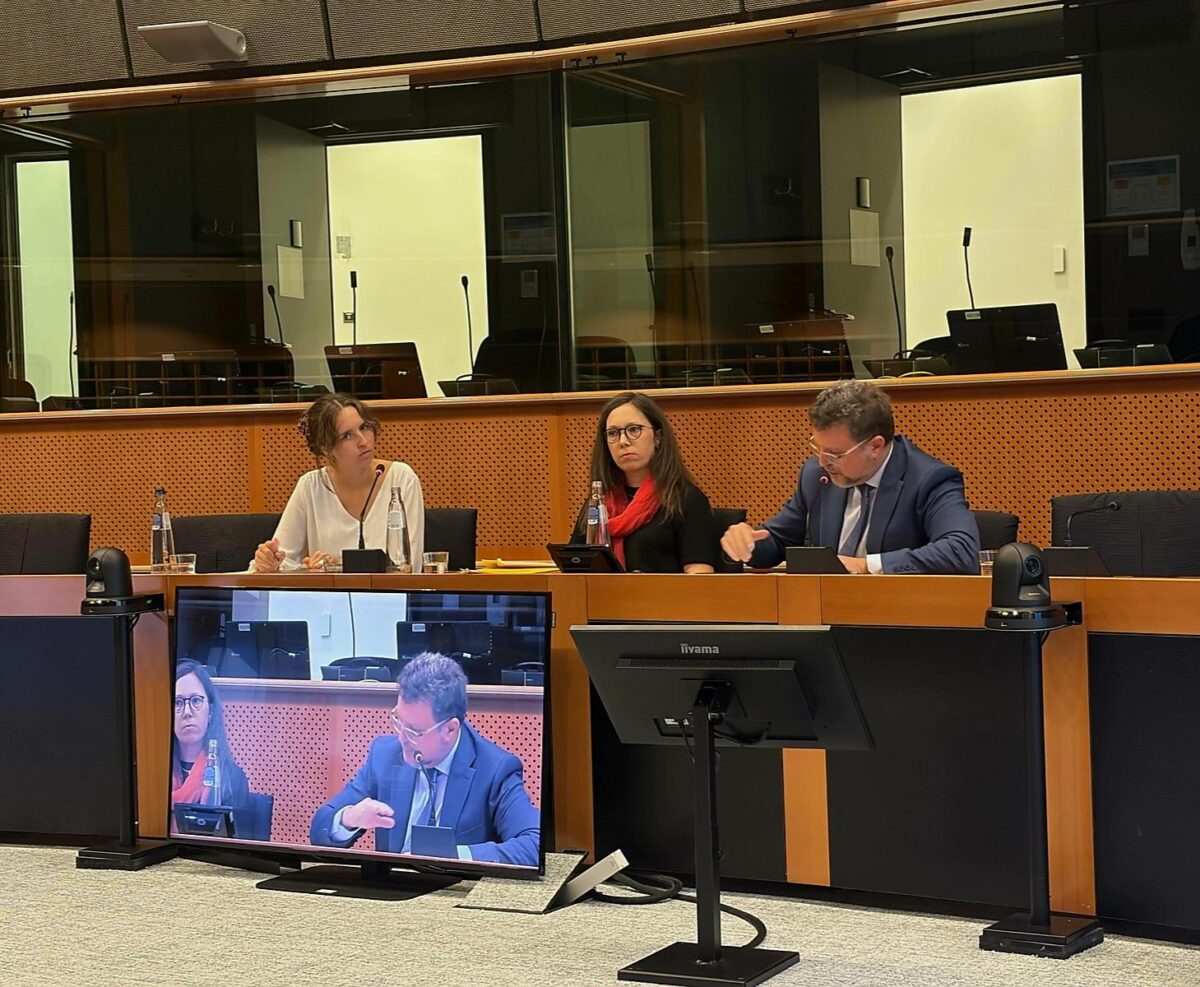
Academic roundtable with concrete proposals for the guidelines
During the academic roundtable, Ioannis Lianos (University College London), Viktoria Robertson (Vienna University of Economics and Business) and Filippo Lancieri (Georgetown University, Washington DC) spoke and Justine Haekens from the University of Leuven moderated the exchange. Daniele Calisti from the EU Commission listened attentively to the contributions and gave feedback on the concrete proposals on the guidelines. The panel debated the missing tools to identify and address harms to consumers, as traditional economics is not delivering: concentration and markups increased in Europe over the over 20 years of application of the so-called more economic approach.
- Ioannis Lianos first spoke about the EU Commission’s central reference study on efficiencies, which it had commissioned from the economic consulting firm Oxera (more here: https://rebalance-now.de/interessenkonflikt-studie-zu-fusionskontrolle-von-oxera/). He emphasized that the study only covers parts of the current research situation on merger control and criticized that important aspects, including financial analysis were omitted from the study entirely.
- In her presentation, Viktoria Robertson focused on the consequences of the current guidelines for media pluralism and made clear how to sharpen them up in favour of plurality. She also insisted the Commission should ensure coherence with the European Media Freedom Act.
- Filippo Lancieri criticised the fact that the guidelines still focus on consumer welfare and that this term has become very eroded. He called for a more concrete version of the harmful consequences of mergers (theories of harm) in a more appropriate place. In addition, Lancieri made clear that the problem of information asymmetry between companies and competition authorities was not sufficiently addressed in the guidelines. He emphasized that solutions are needed to address this. He summarised that the opportunity to have innovative guidelines had been missed by the Commission. Instead, the current draft reflects the status quo of merger control. That is not very ambitious.
What happens next?
The Commission has announced to finalise the merger guidelines by the end of 2026. The conversations during our event in Bussels have allowed academics, regulators, and civil society to come together to engage in important debates over the effectiveness of essential tools and the economic frameworks used in merger control.
As the guidelines undergo their final weeks of review, we find these multidisciplinary considerations for effective market enforcement to be an imperative aspect of the process. We hope that these discussions will have an distinct impact.. And we will continue to advocate in Brussels for the guidelines to serve as tool for tightening of merger control.
