
In technology, media, food and critical supply chains, a growing number of markets in France and Europe are dominated by a handful of powerful corporations. The consequences extend far beyond economics. Concentrated power is raising prices, limiting choices, reshaping public debate, hampering innovation, reducing worker power and undermining the French people’s ability to determine their future.
And yet, French public debate is only just beginning to grapple with this challenge.
On September 25 2026, Rebalance Now alongside the Observatoire des multinationales and Open Markets Institute Europe organised a first-of-its-kind conference in Paris on the threats that market concentration and strategic dependencies pose to prosperity, democracy and sovereignty.
Speakers included Pascal Lamy (Paris Peace Forum), Jonathan Kanter (ex-US Department of Justice), Benoît Coeuré (Autorité de la concurrence), Laure de la Raudière (Arcep), Romain Laleix (Arcom), Lucie Castets (Maire of the 12e arrondissement), Antoinette Guhl (French Senate), Sophie Taille-Polian (Assemblée nationale), Cécilia Rikap (UCL), and Alberto Alemanno (HEC/Good Lobby).
Here’s what we covered:
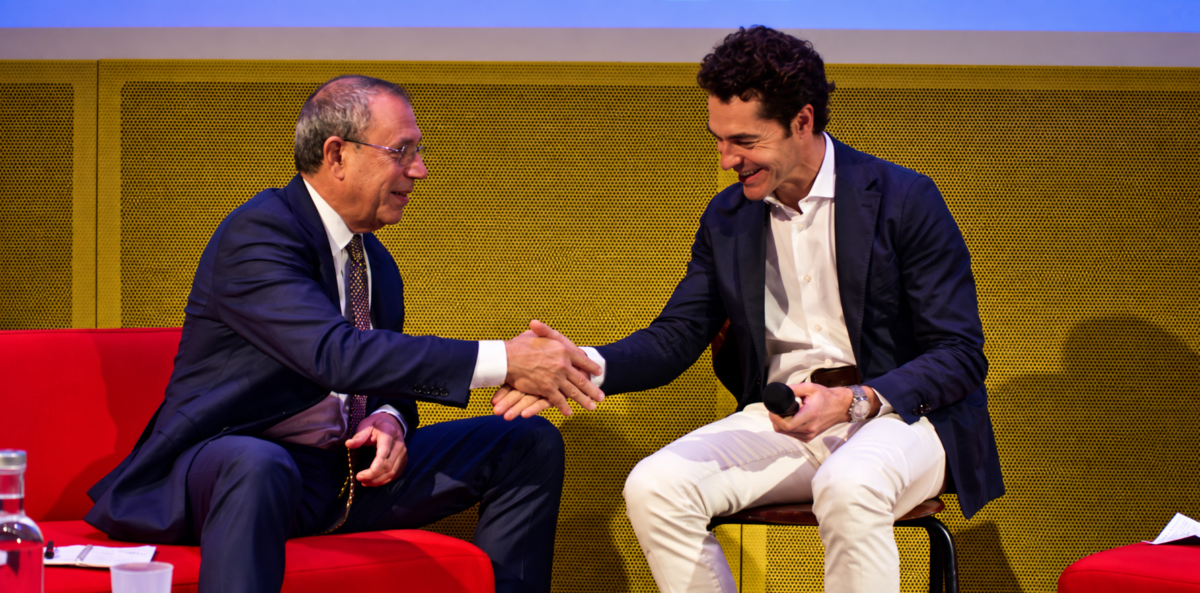
A Transatlantic Discussion with Barry Lynn and Alberto Alemanno
Open Markets Institute Executive Director Barry Lynn and Professor of EU Law at HEC Paris Alberto Alemanno opened with a fundamental question: what happens to democracy when corporations become powerful enough to constrain the choices of governments and citizens?
Alemanno warned that Europe, dependent on American technology, has been slow to recognize the threat to human agency. Lynn traced three moments of transatlantic convergence on antimonopoly policy, from the early 1900s to the neoliberal turn that let American firms take over Europe’s information systems.
Europe now faces a two-front challenge, Lynn argued: American tech giants concentrating control over information and China’s industrial power hollowing out European production. His answer was a renewed transatlantic commitment to a simple principle: no corporation, government or individual should hold dominion over others. Lynn predicted that 2028 could bring an American political realignment comparable to 1912, and called on France to lead Europe’s renewal.

Keynote by Former WTO Director-General Pascal Lamy
Former WTO Director-General Pascal Lamy argued that capitalism has an inherent tendency toward concentration – and that AI is accelerating it, particularly in digital markets dominated by American and Chinese firms.
Europe’s stable legal framework contrasts with America’s political swings, he said, while Trump’s efforts to weaken EU digital and competition policy have so far failed.
But Lamy warned that economic concentration can quickly become political power. Vertical integration – such as a media conglomerate acquiring television, radio, newspapers and publishing houses – can give market power direct influence over public opinion. Competition authorities, he argued, have not done enough to confront that threat.
Lamy called for independent European digital infrastructure and urged Europe’s left to update its analysis of capitalism for an era defined by the growing political power of billionaires, monopolies and corporate interests.
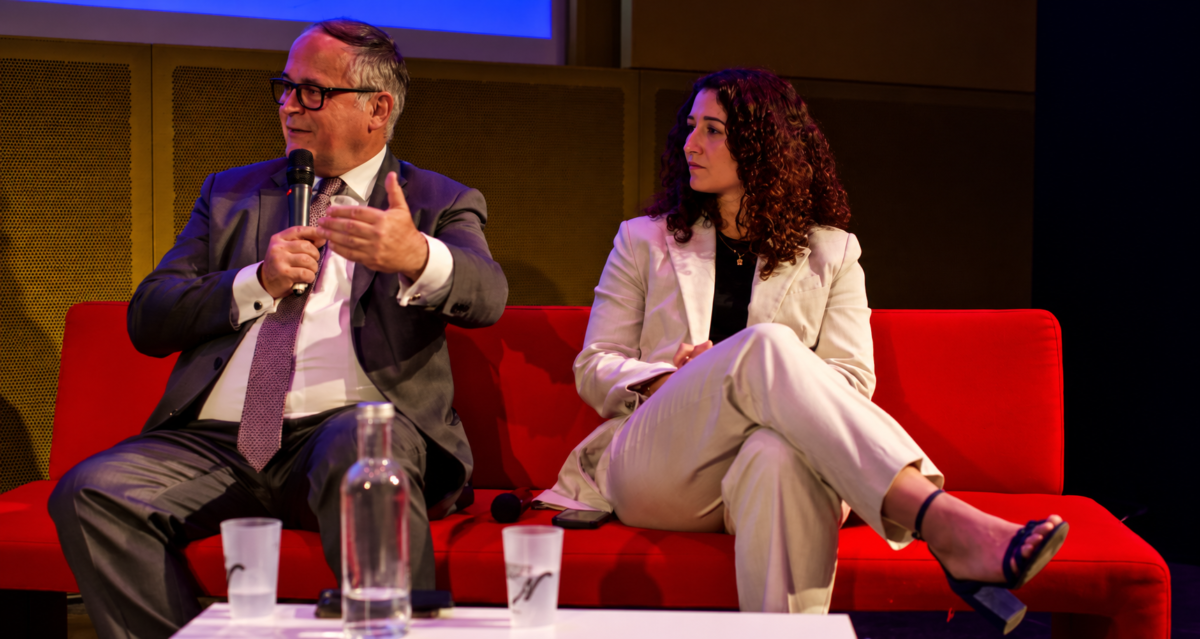
Panel: France in the Face of New Monopolies
The opening panel examined how rising economic concentration threatens Europe’s economy, sovereignty, and democracy.
- Benoît Cœuré, President of the French Competition Authority, warned that ecosystems can hold users hostage and that agentic AI could erode consumer choice, urging policymakers to rebalance a discourse favoring corporate freedom.
- Alberto Alemanno cautioned that cloud dependence and “epistemic capture,” including Google’s funding of much academic research, weaken democratic autonomy, and opposed regulatory “simplification” in the EU.
- Elvire Fabry, Director at the Jacques Delors Institute, and Celia Agostini, Director at Cleantech for France, highlighted China’s dominance of rare earths and clean-tech supply chains, calling for competition policy with a longer time-horizon, resilience alongside price, and genuine “Made in Europe” preferences.
- Christina Volpin, Competition Policy Expert at the OECD, urged proportionate rules, early consultation of competition authorities in policymaking, and industrial policy that lets the most competitive actors emerge rather than shielding incumbents. Panelists split on whether regulation burdens SMEs or benefits large firms. Cœuré closed by calling for EU-level industrial policy.
Panel: Resisting the AI and Big Tech Juggernauts
Europe’s dependence on American technology is no longer simply an economic question – it is one of sovereignty. With the US government now using that dependence as leverage to constrain the EU’s ability to regulate increasingly powerful American firms, including AI companies, Europe faces an urgent question: who will ultimately set the rules governing its digital future?
- Martin Hullin, Director, Network for Technological Resilience & Sovereignty at Bertelsmann Stiftung, said the EuroStack initiative was a response to critical dependencies, not isolationism, and called for a rebirth of digital commons.
- Laure de la Raudière, President of Arcep, defended the Digital Markets Act as a way to regulate tech gatekeepers, urged the Commission to resist political pressure, and warned that simplification is not regulation. She also urged rules reflecting tech’s fast-growing energy footprint.
- Cécilia Rikap, Professor at University College London, argued that cloud computing is the foundation of all digital services and gives a few firms control over governments, universities, and companies, and said Europe missed its chance to build democratic alternatives.
Panelists agreed the question is who controls the technology, not where it is made, and urged public governance of digital systems.
Panel: Media Concentration
The third panel turned to one of the clearest examples of economic power becoming political power: the media.
- Fabrice Fevrier, Co-Director of the Observatory for Media, noted that France has no industrial policy for media – a gap billionaire Vincent Bolloré exploited by acquiring struggling outlets.
- Sophie Taille-Polian, Vice-President of Cultural Affairs Commission at the National Assembly, traced declining public funding across successive governments and cited the Journal du Dimanche as an example of media used for cultural war.
- Romain Laleix, Member of the college at Arcom, urged qualitative pluralism assessments in merger review, foreign ownership limits, remuneration when platforms use press content, and guaranteed funding for small media.
- Christophe Leclercq, Founder of Euractiv and Chair of Europe MediaLab, distinguished national concentration from transnational consolidation and backed European champions to strengthen sovereignty.
Keynote by Jonathan Kanter
In his keynote address, former head of the US Department of Justice’s Antitrust Division Jonathan Kanter argued that antimonopoly policy needs more than just a collection of cases: it needs a defined sense of purpose.
Lowering prices and protecting consumers matter, he argued, but they are not a complete vision. Kanter asked why a free and fair economy matters, and concluded that competition, democracy, and freedom go hand in hand.
Policy, he said, must serve the needs of the public rather than those of corporations or politicians. A free society requires a sustained effort to offset power’s natural tendency to override people’s needs, and that means looking beyond just big cases.
Kanter said innovation should be preserved, but people must come first. In an interconnected world, governments must protect interests within their borders while developing ideas that transcend them in order to promote cooperation.
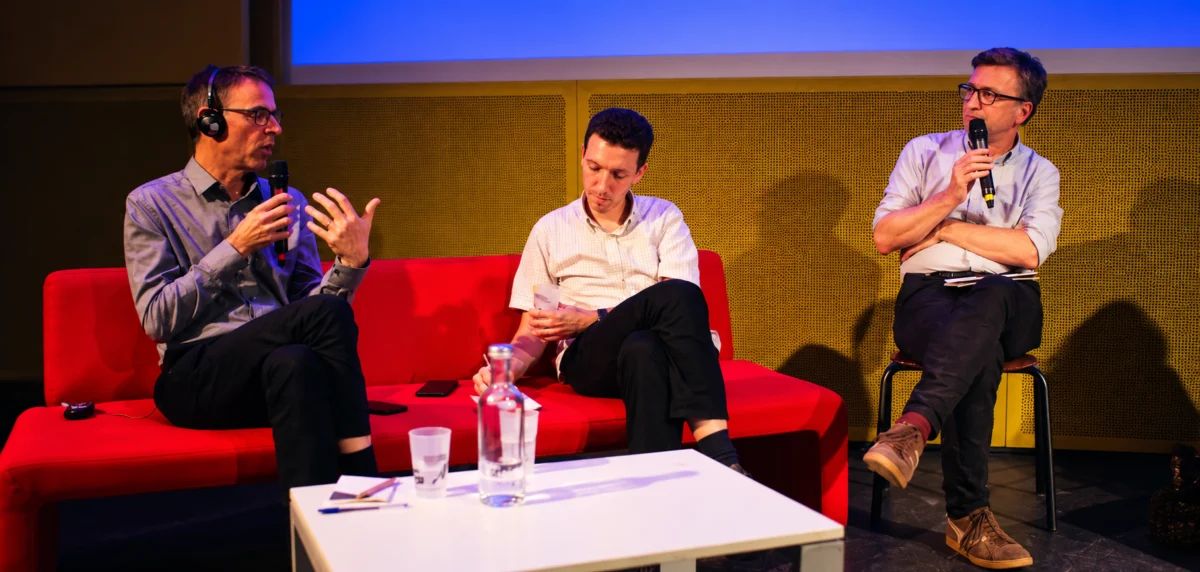
Panel: Food – How to Rebalance The Value Chains
A broken economic model in the food sector has left both producers and households struggling.
- Christophe Alliot, Co-founder at BASIC, said the North American model of low prices and standardisation pits farmers worldwide against each other, driving debt and chemical use, while apparent choice in supermarkets hides concentration further up the supply chain.
- Paris Senator Antoinette Guhl, whose committee produced a cross-party report, said only 25% of value added reaches producers and that distributors use predatory practices, adding that hearings took place amid intimidation.
- Our Executive Director Ulrich Müller noted that four companies hold 90% of Germany’s supermarket market, and called for blocking mergers, breaking up dominant firms, and using competition tools more aggressively.
- Nadia Ziane, Director of the Consumer Department at the Rural Families Association, said fruit and vegetable prices have risen 60% in ten years, and urged the competition authority to examine distributor margins. She proposed selling 100 essential products at cost.
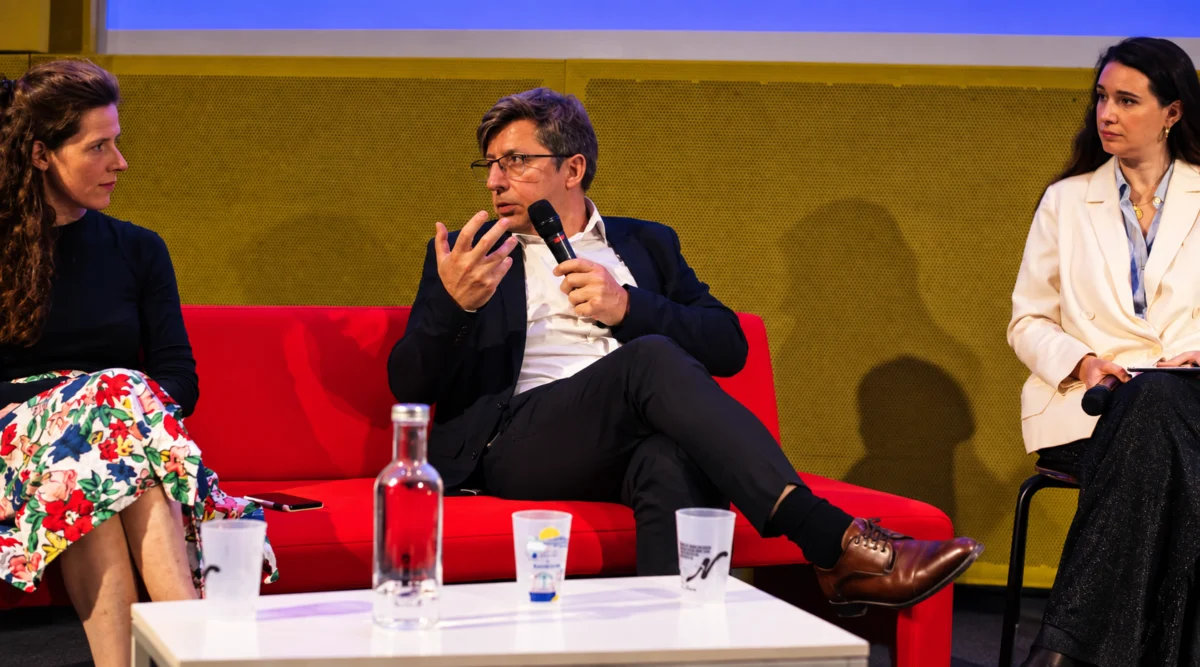
Panel: The Way Forward? Reforms and Actions for Economic Democracy
At the closing panel, experts discussed the way forward to combat concentrated economic power.
- Claire Lavin, Research Fellow at Open Markets Institute Europe, challenged the case for larger firms and said recent Commission studies show mergers deliver neither innovation nor lower prices, and warned that the Omnibus simplification favors big companies. She urged European-preference public procurement and asked France to drop its national champions agenda. She also argued for making use of the EU’s anti-coercion instrument if blackmailed by other countries via trade policy instruments.
- Lucie Castets, Mayor of the 12th District of Paris, argued the first question is which social needs the market can meet, and called for mixed-economy companies and citizen participation in decisions.
- Chahin Faiq, Secretary General at Les Licoornes, said mobile capital leaves communities behind, and urged public authorities to back cooperatives over private investments.
- Nicolas Portier, Professor at Sciences Po, said oligopolies of five to eight firms now hold around 60% of many French sectors, from nursing homes to pharmacy suppliers. He called for responsible, transparent local procurement and parliamentary debate on excessive market concentration.
